

Why Brass Sheet Thickness Consistency Is Critical in CNC & Stamping Operations

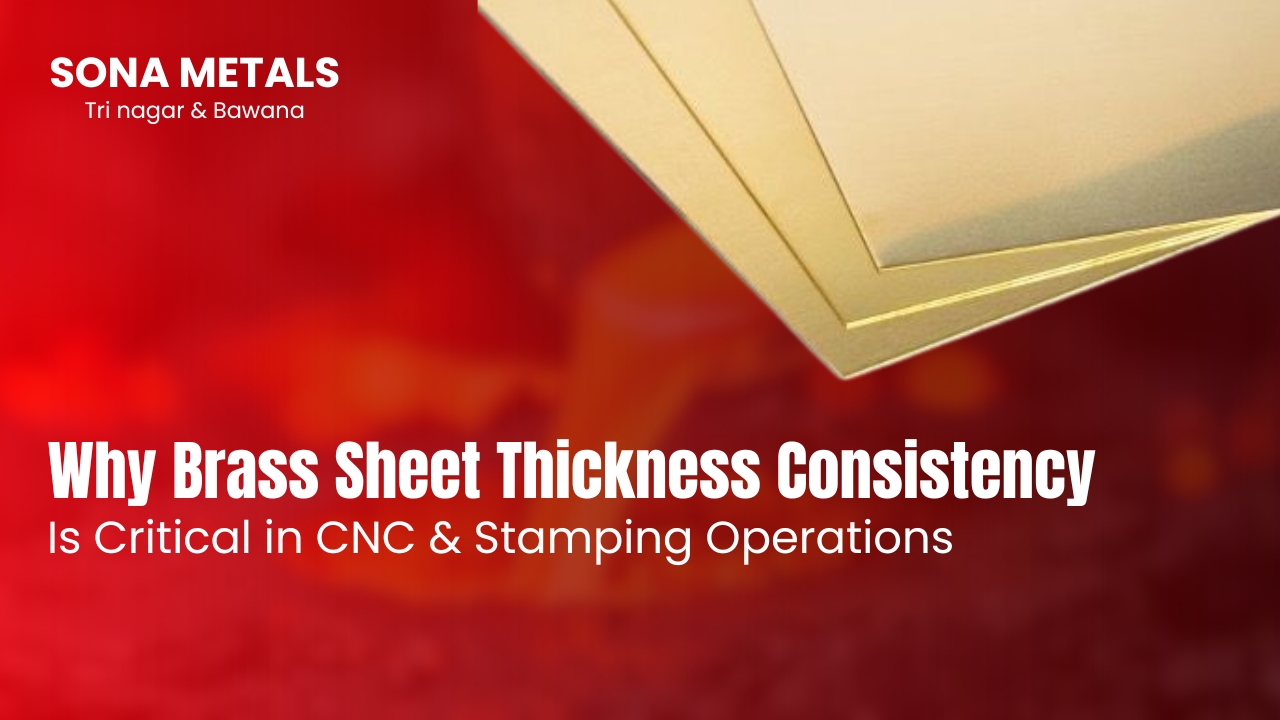
When it comes to CNC machining and metal stamping, precision is key. Any deviation in sheet material thickness can result in a great level of disruption to the production process, inaccurate parts, and higher manufacturing costs. For businesses who depend on brass sheet metal to accomplish their brands and product’s appearance specifications, your application needs conditions in which brass thickness is not a quality preference but a production requirement.
Brass has good machinability and corrosion resistance, as well as being a decorative material. Yet, these benefits can only be fully realized when the brass sheet employed in manufacturing has uniform thickness - from one batch to another and also on each individual sheet.
Importance of Thickness Consistency in CNC Machining
CNC machines operate with very small tolerances. Tooling typepath size depth of cut and feed rates are all determined based on a fixed stock thickness. Brass sheet thickness variation, even on small amounts can cause inconsistent cuts and surface flatness problems.
Inconsistent sheet brass machine operators are subject to constant re-setting and consequent production slow down and the likelihood of errors is increased. In the long run, such a discrepancy results in increased tool wear since at machining cutting tools are unevenly loaded. On the opposite to this, regularly shaped brass sheets guarantee CNC machines smooth operation, results repeatability and consequently high productivity in production.
The Importance of Uniform Brass Sheets in Stamping Operations
Thickness changes are extremely critical in the case of stamping. For example, processes such as blanking, punching, bending and forming rely on consistent material response. Variable thickness of the brass sheet causes variable forming pressure which is also prone to cracks, warping and incomplete bends.
The other big thing is tooling damage. The dies and punches are designed for a specified range of thickness, and out-of-tolerance brass will ruin the tool. This adds to the downtime and extra expense for maintenance, as well as causing production to be rescheduled. Consistent thickness across the brass sheets smoothes stamping cycles and minimizes scrap accumulation, resulting in tool life extension.
Effects in Terms of Surface Roughness and Part Quality
Surface quality is of importance in several brass applications especially for decorative parts, electrical fittings and exposed architectural sections. Uneven thickness may cause inconsistent pressure during machining or stamping, causing scratches, marks and deformations on the workpiece.
One side of these sheets is polished to either a brushed or mirror-like finish. This helps to reduce the work that needs to be done, improves aesthetics and ensures end product components meet both functional and visual requirements demanded by consumers.
Cost Efficiency Through Material Consistency
At first, the lower cost of brass sheets may seem like a good deal. Yet thickness which is not consistent frequently causes higher total production cost through scrap rate, die change frequency, machine down time and quality reject.
Consistent brass sheet gauge allows manufacturers to better plan material use, minimizing waste and maintaining consistent production output. In the long run, the amount saved in efficiency and rework more than offsets any initial discrepancy of cost in material acquisition.
Long-Term Reliability of Finished Components
Brass parts are common in applications that see mechanical stress, temperature variation, or exposure to moisture. Changes in sheet gauge are used to form weak links in completed parts which may fail prematurely, change shape or corrode.
Uniform brass plates provide the electric current make sure stress is evenly applied to the component, enabling a long-lasting performance. This is especially crucial for automotive components, electrical connectors, plumbing parts and precision-engineered bodies where reliability cannot be compromised.
How to Choose the Ideal Brass Sheet Supplier
Thickness consistency begins when you choose a trustworthy supplier. Raw material, alloy composition, rolling sizing process are controlled by a reliable brass sheet manufacturer or supplier at every step of manufacturing.
We provide our customers with brass sheet metal that has been manufactured from excellent quality of raw materials only after purchasing the latest technology. By offering controlled rolling, precision testing and batch control, Sona Metals guarantees that each brass sheet behaves consistently in the CNC milling and stamping processes.
Conclusion
Consistency is the basis of efficiency, accuracy and cost control in CNC machining stamping. Rather than tool wear, however, punching characteristics improve surface finish and the performance of finished components make it necessary to have a constant brass sheet thickness; tensile resistant foil.
Reliable Brass Sheet Metal And Plate For Making All Types Of Parts Industrial, Manufacturing, and other business sectors can be in need of brass sheets for maintaining colossal production process. With an emphasis on quality, reliability and industrial performance Sona Metals provide the brass sheets to ensure for smooth and profitable fabrication operations.
In search of uniform, fabrication-ready brass sheet?
For superior brass metal sheet use for CNC machining or stamping we are the experts you need contact Sona Metals.
🌐 Visit: www.sonametals.in
📞 Call our specialists today for quotes and bulk supply options.










 Brass Products
 Copper Products
 Aluminium Products