

Why Copper Remains the Backbone of Modern Electrical Infrastructure

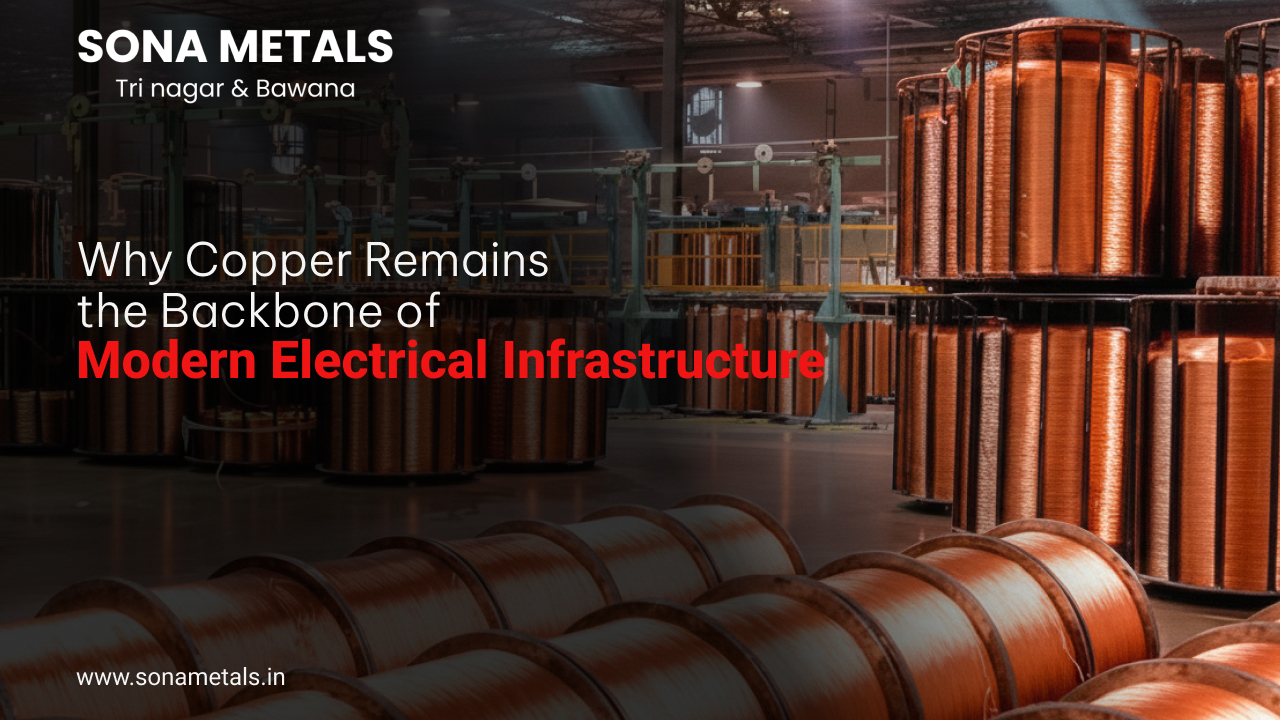
With electrical infrastructure moving to accommodate higher loading, more intelligent systems and more onerous safety regimes, a conscious decision-making of the conductor type is becoming increasingly important. As much as alternative metals and alloys may progress, copper still acts as the lifeblood of today’s electrical infrastructure — running from power generation and transmission to distribution, grounding, and ultimately end-use equipment.
This ongoing use of copper is in no way a legacy call. It is based on copper’s optimum combination of electrical performance, mechanical strength, longevity and cost-effectiveness.
Superior Electrical Conductivity
One of the best known electrical conductors is copper. This allows electrical systems to:
- Efficiently transfer power with the least energy loss
- Decrease the heat, under very high current load.
- Stable voltage over long distances
High conductivity is particularly important in applications like bus bars, earthing systems, switch gear, transformers and power cables where inefficiency results in heat build‐up and the waste of energy as well as safety issues.
Thermal Performance and Heat Dissipation
Heat is produced as an undesirable product of electrical power. Copper’s superb thermal conductivity that cause it to transfer away excess heat without warming:
- Overheating of conductors
- Degradation of insulation materials
- Premature system failures
It is for that reason that copper is perfect for high-load electrical panels, substations, wind and solar generating systems, and industrial power distribution – where temperature stability cannot be compromised.
Mechanical Strength and Reliability
Other than electrical properties, copper offers the physical robustness to endure:
- Thermal expansion and contraction
- Mechanical vibration
- Load due to installation and sustained load due to operation
Copper continues to hold its shape over time, minimizing the possibility of loosening connections, fatigue cracking or deformation—problems which can lead to unsafe conditions and unreliable operations.
Resistant To Corrosion And Long Service Life
Copper offers excellent corrosion resistance in most environments including industrial and marine. In the presence of moisture, contaminants, and thermal cycles, both have an ability to develop a protective oxide coating that stabilizes rather than weakens copper native metal.
This resistance is essential for:
- Outdoor substations
- Earthing and grounding systems
- Power distribution to marine or industrial areas
This results in a longer life of service and minimal, maintenance needs which means a decrease in lifecycle costs.
Safety and Compliance Advantages
Copper is preferred for its consistent performance under load and fault conditions as compared to other metals such as aluminium. Copper conductors:
- Handle overloads more safely
- Provide consistent grounding performance
These features help assure safety compliance in power, infrastructure, manufacturing and commercial applications.
Compatibility with Modern Manufacturing
Copper is well suited to up-to-date production techniques like:
- CNC machining
- Stamping and forming
- Bending and brazing
Its consistent handling and control in production translates to reliable performance for automated and high volume electrical manufacturing.
Consistent Copper is Key
Although copper also carries great advantages practically, its qualities is very much determined by the consistency in quality. Changes in purity, surface finish or thickness will result in:
- Increased electrical resistance
- Uneven heat distribution
- Reduced mechanical reliability
This is why today’s electrical infrastructure progressively depends on process-controlled copper providers who guarantee quality consistency, traceability and performance / reliability from batch-to- batch.
Copper in the Electric Grid of Tomorrow
As industries transition toward:
- Renewable energy systems
- Electric vehicles and charging infrastructure
- Smart grids and automation
Ever-increasing demands for reliable, high performance conductors persist. The known performance of copper makes it unmatched in its ability to meet these changing requirements now and for the decades ahead.
Conclusion
That copper has stood the test of time in modern electrical delivery systems is not an artifact of historical acceptability. The unmatched conductive, thermal, mechanical and corrosion-resistant properties of copper make it crucial for safe power systems.
When it comes to electrical applications, where performance and safety are the two of the most important factors in all installations, copper is hard to beat.
Sona Metals offers copper rods, sheets, strips and plates ideal for uniform electrical engineering applications.
🌐 Visit: www.sonametals.in
📞Call our technical team for more details and bulk orders




 Brass Products
 Copper Products
 Aluminium Products