

Difference Between Brass, Bronze and Copper: Properties, Uses, Applications & Selection Guide

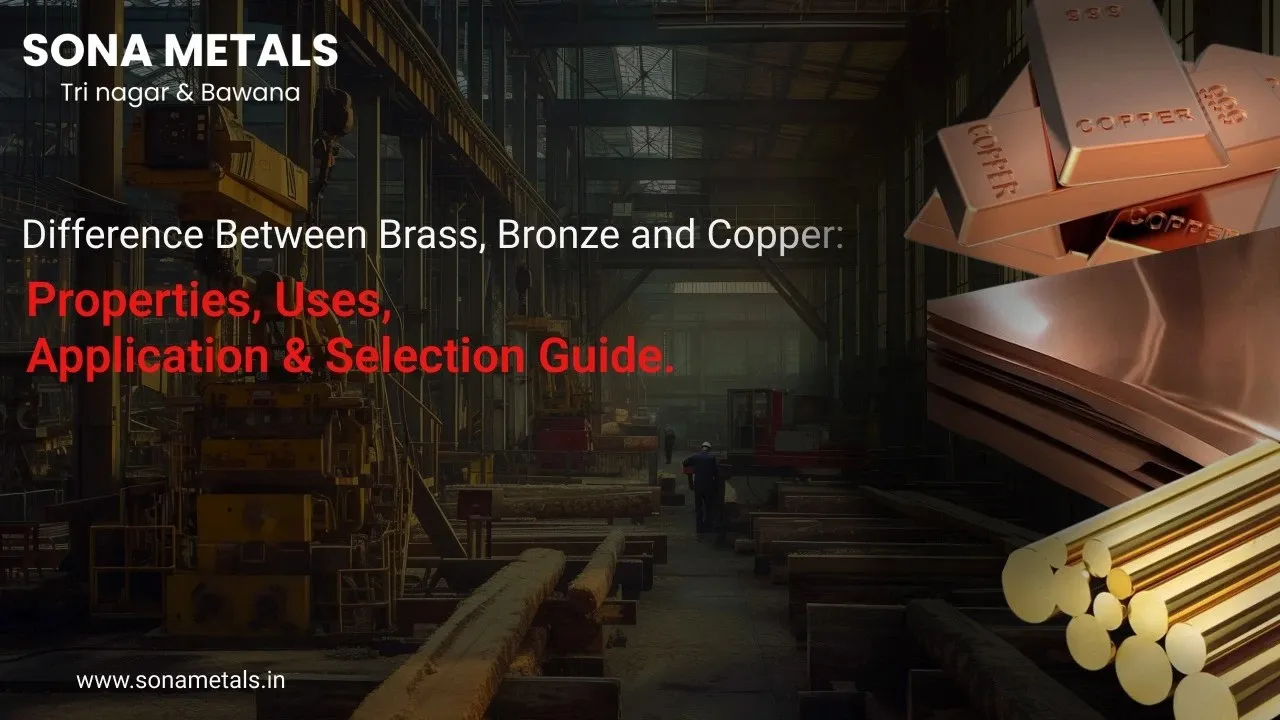
Non-ferrous metals like copper, brass, and bronze are the backbone of multiple industries, including electrical, marine, automotive, construction, engineering, and manufacturing. These metals are widely used in the form of rods, bars, flats, sheets, and components.
However, many buyers, engineers, and procurement teams often struggle to understand the real difference between brass, bronze, and copper and which one is suitable for their specific application. Sona Metal helps simplify this decision with expert guidance and quality materials.
Choosing the wrong metal can lead to:
- Early wear and tear
- Corrosion issues
- Reduced performance
- Increased maintenance cost
This detailed guide will help you understand their composition, properties, advantages, applications, and how to select the right material for industrial use.
What is Copper?
Copper is a pure, naturally occurring metal known for its exceptional electrical and thermal conductivity. It is one of the oldest metals used by humans and remains essential in modern industries.
Key Properties of Copper
- Excellent electrical conductivity (best after silver)
- Very high thermal conductivity
- Soft and highly malleable
- Strong corrosion resistance
- Easy to form and shape
Industrial Uses of Copper
Because of its conductivity and corrosion resistance, copper is mainly used in:
- Electrical wiring and cables
- Switchgear and electrical panels
- Heat exchangers
- Plumbing tubes
- Bus bars and connectors
Copper is the first choice when electrical performance and heat transfer are required.
What is Brass?
Brass is an alloy made primarily from copper and zinc. The addition of zinc improves strength, machinability, and durability compared to pure copper.
Brass is one of the most widely used metals for machining parts, fittings, rods, and hardware components.
Key Properties of Brass
- Better strength than copper
- Excellent machinability
- Good corrosion resistance
- Attractive gold-like finish
- Durable and cost-effective
Industrial Uses of Brass
Brass is extensively used in:
- Brass rods and bars
- Plumbing fittings and valves
- Fasteners and connectors
- Decorative hardware
- Electrical terminals
- Automotive components
Brass is ideal where machining, durability, and appearance are important.
What is Bronze?
Bronze is an alloy made of copper and tin. It is harder and more wear-resistant than both copper and brass. Bronze is known for its excellent performance in heavy-duty and marine environments.
Key Properties of Bronze
- Very high strength
- Excellent wear resistance
- Superior corrosion resistance (especially in seawater)
- Low-friction properties
- Long service life
Industrial Uses of Bronze
Bronze is commonly used in:
- Bearings and bushes
- Marine equipment and ship parts
- Industrial machinery components
- Bronze round bars
- Pump and valve parts
Bronze is preferred for high load, friction, and harsh environments.
Major Difference Between Brass, Bronze and Copper
| Feature | Copper | Brass | Bronze |
| Composition | Pure metal | Copper + Zinc | Copper + Tin |
| Strength | Soft | Medium | Very high |
| Corrosion Resistance | High | High | Very high |
| Machinability | Moderate | Excellent | Good |
| Wear Resistance | Low | Medium | Very high |
| Main Application | Electrical | Fittings & hardware | Heavy machinery & marine |
How to Choose the Right Metal for Your Application
Choosing the right metal depends on your requirement:
Choose Copper When:
- Electrical conductivity is required
- Heat transfer is important
- Plumbing or wiring applications
Choose Brass When:
- Machining and shaping is required
- Hardware, fittings, rods, or fasteners are needed
- Decorative finish is preferred
Choose Bronze When:
- Wear resistance is required
- Parts face friction and load
- Marine or chemical exposure is involved
Importance of Quality in Non-Ferrous Metal Supply
The performance of copper, brass, and bronze products highly depends on the quality of alloy composition and manufacturing standards. Poor-quality metal can lead to cracking, corrosion, and early failure.
A trusted supplier ensures:
- Correct alloy grades
- Proper hardness and strength
- Dimensional accuracy
- Long-lasting performance
Sona Metals supplies premium qualitycopper alloys, brass rods, bronze bars, and non-ferrous metal products suitable for a wide range of industrial applications.
Conclusion
Understanding the difference between brass, bronze, and copper is essential for making the right industrial material choice. Each metal has unique properties that make it suitable for specific uses.
- Copper is best for electrical and heat applications.
- Brass is ideal for machining, fittings, and hardware.
- Bronze is perfect for heavy-duty, friction, and marine environments.
Selecting the right metal from a reliable supplier ensures better performance, durability, and cost efficiency for your projects.
If you are looking for high-quality brass, bronze, and copper alloy rods and bars, partnering with an experienced non-ferrous metal supplier like Sona Metals guarantees material reliability and performance.
FAQs
1. What is the main difference between brass and bronze?
Brass is made of copper and zinc, while bronze is made of copper and tin. Bronze is stronger and more wear-resistant than brass.
2. Which metal is best for electrical applications?
Copper is the best choice due to its excellent electrical conductivity.
3. Why is bronze used in marine applications?
Bronze offers superior corrosion resistance in seawater and harsh environments.
4. Is brass stronger than copper?
Yes, brass is stronger and more durable than pure copper.
5. Which metal is best for machining parts?
Brass is preferred for machining due to its excellent machinability.
6. Do non-ferrous metals rust?
No, non-ferrous metals like copper, brass, and bronze do not rust because they do not contain iron
 Brass Products
 Copper Products
 Aluminium Products