

Copper Busbars in Electrical Panels: Complete Industrial Guide for India

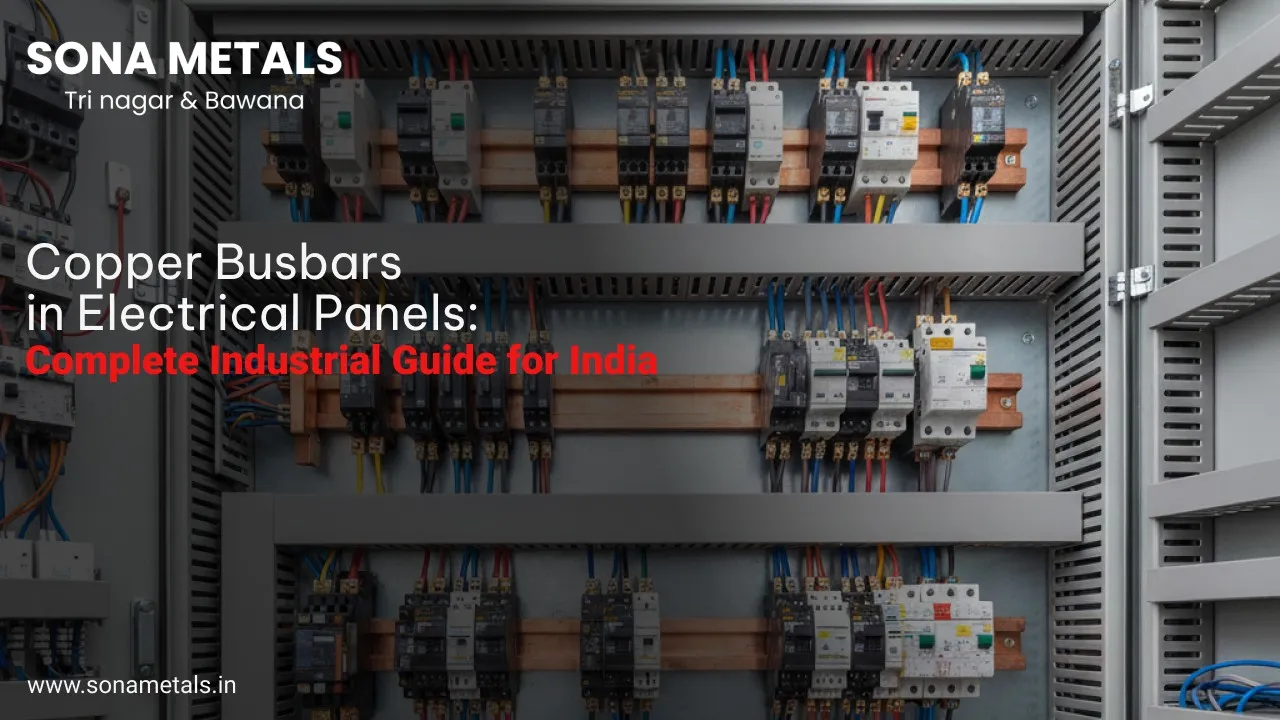
India’s rapid growth in power infrastructure, renewable energy, manufacturing, and commercial construction has significantly increased the demand for reliable electrical distribution systems. One of the most critical components in these systems is the copper busbar.
Copper busbars are widely used in electrical panels, switchgear systems, substations, and industrial power distribution because of their superior conductivity, durability, and safety.
In this complete guide, we will explain:
- What copper busbars are
- Why are they preferred in India?
- Technical specifications
- Types and applications
- Advantages over aluminium
- Selection considerations
What is a Copper Busbar?
A copper busbar is a solid strip or bar made of high-conductivity copper used to distribute electricity within electrical panels and switchboards.
It acts as a central conductor that carries and distributes current efficiently to various outgoing circuits.
Due to its excellent electrical properties, copper is considered the most reliable material for power distribution components.
Why Copper Busbars Are Preferred in India
India’s power sector operates under challenging conditions:
- High ambient temperatures
- Voltage fluctuations
- Industrial load variations
- Dust and humidity
Copper performs exceptionally well in such environments because of:
- High electrical conductivity
- Low thermal expansion
- Excellent corrosion resistance
- Strong mechanical strength
These properties make copper busbars ideal for the Indian electrical infrastructure.
Key Properties of Copper Busbars
1️⃣ High Electrical Conductivity
Copper offers about 99% IACS conductivity, ensuring minimal energy loss.
2️⃣ Excellent Thermal Performance
Copper handles high temperatures without losing structural strength.
3️⃣ High Current Carrying Capacity
Copper busbars can carry higher current compared to aluminium of the same size.
4️⃣ Superior Mechanical Strength
Better resistance to vibration and mechanical stress.
5️⃣ Corrosion Resistance
Performs well in humid and industrial environments.
Types of Copper Busbars
🔹 Bare Copper Busbars
Used in indoor switchgear and panel boards.
🔹 Tinned Copper Busbars
Coated with tin to improve corrosion resistance.
🔹 Silver-Plated Copper Busbars
Used in high-performance switchgear systems.
🔹 Flexible Copper Busbars
Used in compact panel designs and vibration-prone installations.
Technical Specifications to Consider
When selecting copper busbars for electrical panels in India, consider:
- Grade of copper (ETP / Oxygen-Free Copper)
- Cross-sectional area
- Current carrying capacity
- Temperature rise limits
- IS / IEC compliance
- Short circuit withstand capacity
- Surface finish and plating
Following Indian and international standards ensures safety and performance.
Applications of Copper Busbars in India
Copper busbars are widely used in:
- LT & HT electrical panels
- Power control centres (PCC)
- Motor control centres (MCC)
- Transformer connections
- Solar power plants
- EV charging infrastructure
- Industrial manufacturing units
- Commercial buildings
With India’s expansion in renewable energy and smart grids, demand is continuously growing.
Copper vs Aluminium Busbars
| Feature | Copper | Aluminium |
| Conductivity | Higher | Lower |
| Size Required | Smaller | Larger |
| Durability | High | Moderate |
| Maintenance | Low | Higher |
| Long-Term Cost | More efficient | Cheaper initially |
While aluminium may reduce initial cost, copper provides better long-term reliability and lower energy losses.
Advantages of Using Copper Busbars
- Reduced power loss
- Compact panel design
- Higher safety margin
- Longer service life
- Better short-circuit performance
- Lower maintenance cost
For critical power applications, copper remains the preferred material.
How to Choose the Right Copper Busbar
Before purchasing, evaluate:
- Required ampere load
- Installation environment
- Panel size constraints
- Budget vs lifecycle cost
- Compliance requirements
Choosing the correct busbar ensures efficiency, safety, and durability.
Future Demand of Copper Busbars in India
With increasing investments in:
- Renewable energy
- Smart cities
- EV infrastructure
- Industrial automation
- Data centers
The demand for high-quality copper busbars is expected to grow significantly in India.
Conclusion
Copper busbars are a vital component in modern electrical panels across India
. Their superior conductivity, strength, and reliability make them the preferred choice for industrial and commercial power distribution systems.
For long-term performance, safety, and efficiency, copper remains unmatched in critical electrical applications.
Frequently Asked Questions (FAQs)
1. Why are copper busbars better than aluminium in India?
Copper has higher conductivity, better heat resistance, and longer durability. In Indian climatic and industrial conditions, copper provides better reliability and lower long-term maintenance.
2. What grade of copper is used for busbars?
Most busbars use Electrolytic Tough Pitch (ETP) copper or Oxygen-Free Copper due to their high conductivity and purity.
3. Are copper busbars suitable for solar power systems?
Yes. Copper busbars are widely used in solar inverters, combiner boxes, and distribution panels because of their efficiency and reliability.
4. How do I calculate the size of a copper busbar?
Busbar size depends on current load, permissible temperature rise, short circuit rating, and installation environment. It should always be calculated as per electrical standards.
5. Do copper busbars require maintenance?
Copper busbars require minimal maintenance compared to aluminium. However, periodic inspection for tightening and cleaning is recommended.
6. Are copper busbars more expensive?
Copper has a higher initial cost than aluminium, but its longer lifespan, lower energy loss, and reduced maintenance make it cost-effective in the long run.
 Brass Products
 Copper Products
 Aluminium Products