

Why Metal Traceability Is Becoming Non-Negotiable in Industrial Procurement

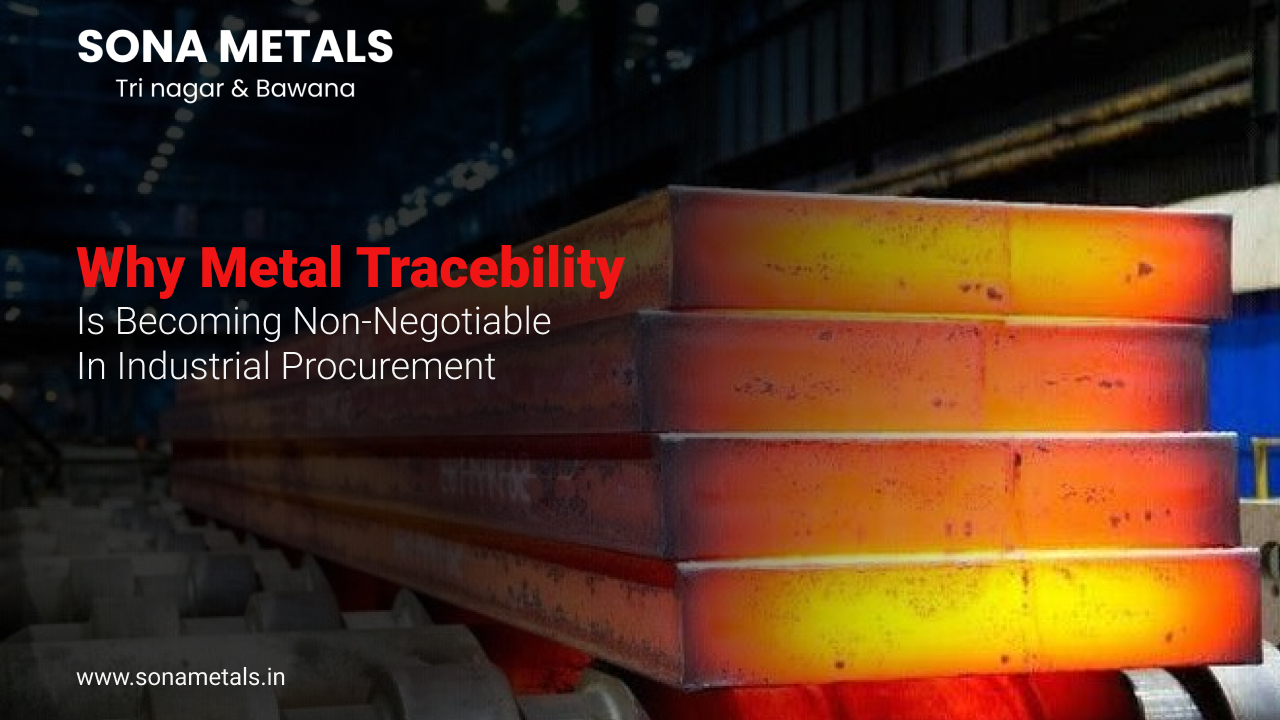
In industrial purchasing, a conversation takes place that’s not (just) about price per kilo or leadtimes. Metal traceability has evolved from a ‘nice to have’ to an essential procurement requirement as production systems become more automated, compliance driven and risk aware.’
No matter the application – whether in electrical infrastructure, automotive parts and equipment, industrial machinery, export-oriented manufacturing or a variety of other industry sectors — materials buyers face heightened pressures to understand where their materials are born and how they were raised…and why.
What Is Metal Traceability?
Traceable steel – from end to end Metal traceability is a concept which allows tracking of a metal product throughout its entire lifecycle, starting from raw material production and alloy composition through rolling, thermomechanical processing (TMP), testing and into the delivery process.
Are-traceable-metal supply usually comprises:
- Documented raw material origin
- Batch-wise or heat-number identification
- Chemical and mechanical test reports
- History of processing (rolling, annealing and surface treatment)
This enables B2B buyers to validate quality, guarantee compliance and research performance with confidence instead of flinching.
Why Traceability Is More Important Than Ever
Increasing Regulatory and Compliance Pressure
Today, there are more stringent safety, quality and export regulations for industries. There are set national and international standards that electrical products, auto parts and building material qualify in order to be accepted.
Without traceability:
- Compliance audits become risky
- Certification claims cannot be validated
- Exposure to liability grows in case of failure or recall
With traceable metals, companies can prove they are in compliance rather than defend the assumption.
Precision Manufacturing Demands Predictable Inputs
Today’s industry uses CNC machining, automated stamping and high-speed assembly lines. They are tuned for homogenised material response.
When the Metal Is of Mixed Quality and Comes from Unknown Sources:
- Tool wear accelerates
- Scrap and rework increase
- Production efficiency drops
It allows the purchasing teams to determine which lots are working in order to standardise sourcing, and thereby stabilise manufacturing.
Risk Mitigation in Critical Applications
And material failure is not only a cost in electric, power, transportation and industrial safety systems — it is also a risk.
In the event of a failure, traceability allows access to the following manufacturers benefits:
- Isolate affected batches
- Conduct root-cause analysis
- Prevent repeat failures
- Avoid widespread recalls
Because if you don’t Tracogs begets guessing, production downtime and brand damage.
Move away from transactional buying to strategic procurement.
Industrial procurement has evolved. Buyers are increasingly doing more than sourcing materials — now they’re managing risk, reliability and long-term performance.
Traceable supply enables:
- Long-term supplier partnerships
- Performance-based sourcing decisions
- Reduced dependency on spot buying
- Better forecasting and inventory planning
This change is driving the trend away from trader-led sourcing, toward process-controlled suppliers for many industrial buyers.
Where Traditional Trading Models Come Up Short on Traceability
Metal suppliers in the past have tended to buy from many plants and processors on the basis of availability or price. While such a model is highly expressive, it is lacking in many cases:
- Consistent batch documentation
- Control over processing parameters
- Reliable material history
This lack of visibility is a significant operational risk in high-precision or safety-critical contexts.
Process-Controlled Suppliers and Traceability
Quality and documentation is integrated in all steps of production and supply working with process-controlled suppliers.
Their systems typically include:
- Controlled raw material sourcing
- Standardised alloy compositions
- Batch-wise testing and inspection
- Complete documentation with every delivery
This ensures that each shipment performs as expected in the buyer’s production line – limiting surprises and unplanned downtime.
The Cost Point of View: Traceability vs Invisible Losses
Although the cost of traceable metals can be seen as slightly higher you would save in so many ways:
- Scrap and rework
- Tool replacement frequency
- Unplanned downtime
- Warranty and failure-related expenses
Across the manufacturing life ford of a product, traceability always provides for a lowest total cost of ownership.
How Traceable Metals Are Being Backed By Sona Metals
Traceability is on the supply side of Sona Metals. Our copper, brass aluminum and bronze items also are backed by:
- Batch-wise quality documentation
- Controlled processing standards
- Consistent material properties
- Transparent supply records
It frees industrial buyers to concentrate on production performance, safety, and compliance—instead of material risk.
🌐 Visit: www.sonametals.in
📞 Talk to our experts about traceable, process-controlled metal solutions.
Conclusion
In today’s industrial world what you don’t know about your material can cost you a lot of money in lost production time, costly equipment breakdowns and energy costs.
Metal traceability is not a luxury anymore—it’s something, that the molded and metal formed parts manufacturers for:
- Compliance
- Operational stability
- Risk management
- Long-term performance
Industrial customers that seek traceability are not overpaying, they are investing strategically in trust and control.



 Brass Products
 Copper Products
 Aluminium Products