

10 Most Common Metals Used in Industrial Manufacturing and Their Uses

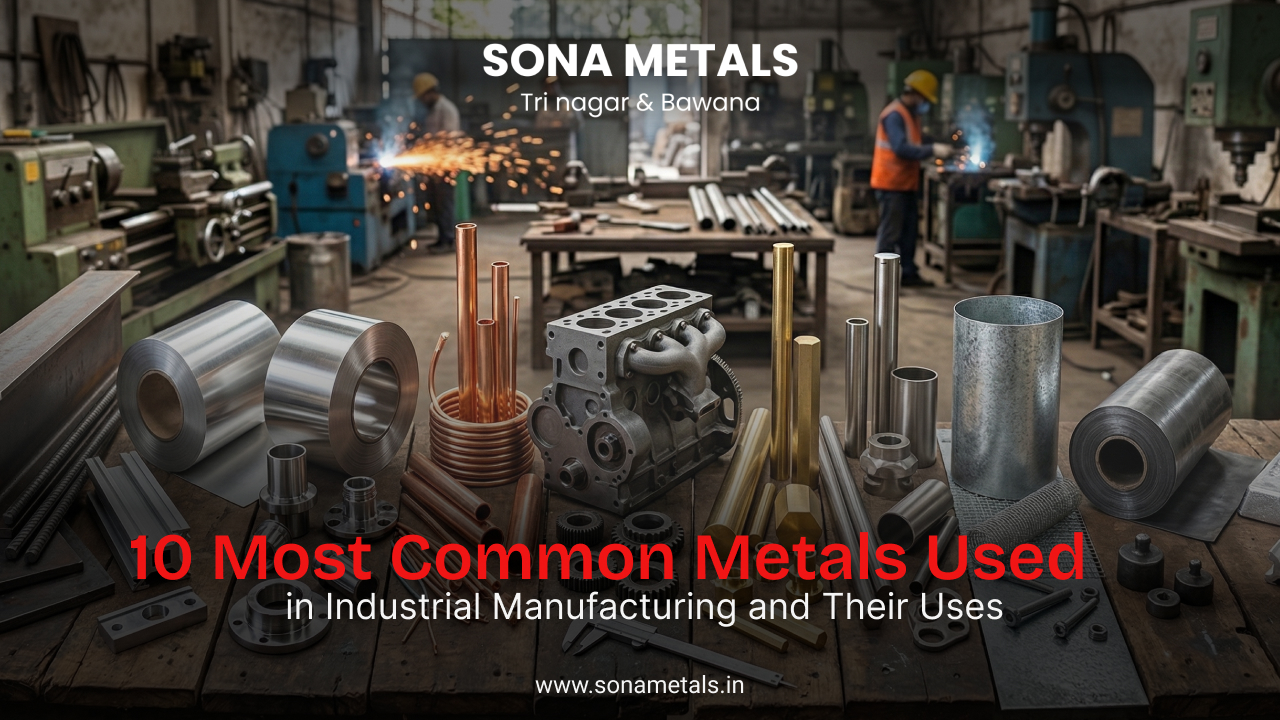
Metals are the backbone of modern industrial manufacturing. From construction and infrastructure to electronics and heavy machinery, different types of metals are used to create durable, efficient, and high-performance products. Each metal has unique physical and chemical properties that make it suitable for specific industrial applications.
Manufacturers and engineers carefully select metals based on factors such as strength, corrosion resistance, conductivity, weight, and cost. Understanding the most widely used industrial metals can help businesses choose the right material for their production needs.
Companies like Sona Metal supply high-quality metal materials used in manufacturing, engineering, construction, and industrial fabrication. Reliable suppliers ensure that industries receive metals that meet strict quality and performance standards.In this guide, we will explore the 10 most common metals used in industrial manufacturing and their uses, along with their key properties and applications.
Why Metals Are Essential in Industrial Manufacturing
Metals have been used in manufacturing for centuries due to their durability and versatility. Modern industries rely heavily on metal materials because they provide structural strength and long-lasting performance.
Some of the major advantages of using metals in manufacturing include:
- High strength and durability
- Resistance to wear and corrosion
- Good thermal and electrical conductivity
- Easy machinability and fabrication
- Long service life in demanding environments
Because of these qualities, metals are widely used in sectors such as automotive, construction, aerospace, electronics, marine engineering, and heavy machinery production.
1. Copper
Copper is one of the most important industrial metals due to its exceptional electrical and thermal conductivity. It is highly resistant to corrosion and can be easily shaped, making it ideal for many engineering applications.
Key Properties of Copper
- Excellent electrical conductivity
- High corrosion resistance
- Good ductility and malleability
- Long lifespan
Industrial Applications
Copper is widely used in:
- Electrical wiring and cables
- Power transmission systems
- Electronics and circuit boards
- Plumbing systems
- Heat exchangers and industrial equipment
High-quality copper materials supplied by companies like Sona Metal are widely used in the electrical and engineering industries where reliable conductivity is essential.
2. Brass
Brass is an alloy made from copper and zinc. It is known for its durability, corrosion resistance, and excellent machinability. Because of its attractive golden color, brass is also commonly used for decorative purposes.
Key Properties of Brass
- Good corrosion resistance
- Easy to machine and fabricate
- Durable and strong
- Attractive appearance
Industrial Applications
Brass is commonly used in:
- Plumbing fittings and valves
- Electrical connectors
- Decorative hardware
- Musical instruments
- Mechanical components
In manufacturing industries, brass components are often preferred because they provide both durability and excellent machinability.
3. Aluminium
Aluminium is a lightweight yet strong metal that has become extremely popular in modern manufacturing industries. It is resistant to corrosion and offers excellent thermal conductivity.
Key Properties of Aluminium
- Lightweight
- Corrosion resistant
- Good thermal and electrical conductivity
- Easy to recycle
Industrial Applications
Aluminium is widely used in:
- Aerospace components
- Automotive parts
- Building and construction materials
- Packaging industries
- Electronics and appliances
Because of its light weight and durability, aluminium is essential for industries that require strong yet lightweight materials.
4. Stainless Steel
Stainless steel is an alloy primarily made of iron and chromium. It is well known for its excellent corrosion resistance and strength, making it ideal for industries that require hygienic and durable materials.
Key Properties of Stainless Steel
- High corrosion resistance
- Strong and durable
- Resistant to extreme temperatures
- Easy to clean and maintain
Industrial Applications
Stainless steel is commonly used in:
- Food processing equipment
- Medical instruments
- Industrial machinery
- Construction and architecture
- Chemical processing plants
Its resistance to rust and contamination makes stainless steel essential in industries that require high levels of cleanliness.
5. Carbon Steel
Carbon steel is widely used in manufacturing due to its high strength and affordability. It contains iron and carbon, making it stronger than many other metal materials.
Key Properties of Carbon Steel
- High tensile strength
- Durable and tough
- Cost-effective
- Suitable for heavy-duty applications
Industrial Applications
Carbon steel is used in:
- Structural construction
- Machinery components
- Automotive frames
- Industrial tools and equipment
Because of its strength and durability, carbon steel is a fundamental material in construction and heavy industries.
6. Bronze
Bronze is an alloy made primarily from copper and tin. It is known for its strength, corrosion resistance, and ability to withstand harsh environments.
Key Properties of Bronze
- Strong and durable
- Excellent wear resistance
- Resistant to corrosion
- Suitable for marine environments
Industrial Applications
Bronze is widely used in:
- Bearings and bushings
- Marine equipment
- Industrial machinery
- Sculptures and decorative items
Its durability and resistance to corrosion make bronze ideal for marine and heavy engineering applications.
7. Titanium
Titanium is one of the strongest and most durable metals used in modern manufacturing. Despite its strength, it is relatively lightweight.
Key Properties of Titanium
- Extremely strong
- Lightweight
- Excellent corrosion resistance
- High temperature resistance
Industrial Applications
Titanium is commonly used in:
- Aerospace components
- Medical implants
- Military equipment
- High-performance automotive parts
Although titanium is more expensive than other metals, it is essential for industries that require high strength and reliability.
8. Nickel
Nickel is a versatile metal used to improve the strength and corrosion resistance of many industrial alloys.
Key Properties of Nickel
- High corrosion resistance
- Strong and durable
- Excellent heat resistance
- Enhances alloy performance
Industrial Applications
Nickel is used in:
- Stainless steel production
- Batteries
- Aerospace components
- Chemical processing equipment
Nickel plays an important role in the development of advanced industrial materials.
9. Zinc
Zinc is widely used to protect other metals from corrosion through a process called galvanisation.
Key Properties of Zinc
- Corrosion resistant
- Durable coating material
- Good casting properties
Industrial Applications
Zinc is commonly used in:
- Galvanised steel coatings
- Die-casting components
- Batteries
- Automotive parts
Zinc coatings significantly increase the lifespan of metal products and structures.
10. Cast Iron
Cast iron is a heavy-duty metal known for its strength and vibration resistance. It has been widely used in manufacturing for centuries.
Key Properties of Cast Iron
- Excellent wear resistance
- Strong and durable
- Good vibration damping
- Cost-effective
Industrial Applications
Cast iron is used in:
- Engine blocks
- Pipes and fittings
- Industrial machinery
- Construction materials
It remains a reliable material for heavy industrial applications.
How to Choose the Right Metal for Industrial Applications
Selecting the right metal is essential for ensuring performance and durability in manufacturing. Several factors must be considered before choosing a material.
Important factors include:
- Mechanical strength requirements
- Corrosion resistance
- Electrical or thermal conductivity
- Weight and structural needs
- Budget and material availability
Working with trusted suppliers such as Sona Metal helps industries obtain high-quality metal materials that meet their manufacturing standards and performance requirements.
Conclusion
Metals are essential for modern industrial manufacturing and infrastructure development. Materials such as copper, brass, aluminium, steel, and titanium provide unique properties that support different industries and applications.
Understanding the characteristics and uses of these metals helps manufacturers choose the most suitable material for their projects. From electrical systems to heavy machinery and construction structures, metals continue to drive industrial innovation.Reliable suppliers like Sona Metal play a crucial role in delivering high-quality metal products that support industries in building durable, efficient, and long-lasting solutions.
 Brass Products
 Copper Products
 Aluminium Products